Leave Your Message

2026 How to Choose Puppy Teething Toys for Global Buyers?

In 2026, global buyers are looking beyond color, price, and attractive packaging when sourcing Puppy Teething Toys. They want products that support healthy chewing, reduce boredom, and withstand daily use. A soft rubber toy may suit a small puppy, while a powerful chewer may need a firmer design. The wrong match can cause rapid damage or create avoidable safety concerns.

A reliable selection process begins with the puppy’s age, breed size, bite strength, and chewing habits. Buyers should examine material quality, surface texture, odor, seams, and small detachable parts. Natural rubber, food-grade silicone, and carefully processed nylon may offer useful options, but material claims require evidence. Supplier specifications should be checked against independent test reports, production samples, and clear quality-control records. Trust is built through verification.

Global sourcing adds practical details. Packaging should protect each toy from dust, moisture, and crushing during transport. Product labels need clear usage guidance, size information, cleaning instructions, and warnings for damaged items. Buyers should also review supplier experience, factory audits, batch consistency, and communication speed. A low unit price can become expensive after returns, complaints, or inconsistent production.

There is no perfect toy for every puppy. That assumption needs testing. Even a well-designed product requires owner supervision and regular inspection. A cracked edge, loose piece, or unusual smell should end use immediately. Buyers who combine veterinary-informed guidance, practical product testing, and responsible supplier evaluation can make stronger decisions. The best choice is not merely appealing on a catalog page. It must remain safe, useful, and dependable in a real puppy’s mouth.

2026 How to Choose Puppy Teething Toys for Global Buyers?

Understanding Puppy Teething Stages and Toy Requirements

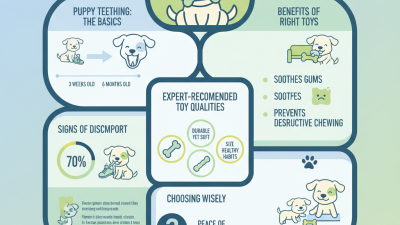
Puppy teething does not follow a perfectly neat calendar. Most puppies begin losing milk teeth at about three to four months. Adult teeth usually appear by six months. During this stage, gums may look red, swollen, or uncomfortable. Puppies often chew chair legs, sleeves, and anything within reach. Watch the puppy, not only the package age. This is where buyers can misjudge.

For early teething, choose soft, flexible toys that bend slightly under pressure. A toy should yield without breaking into sharp pieces. Avoid extremely hard materials that may damage developing teeth. For stronger jaws, textured rubber or tightly woven fabric can provide useful resistance. Textured surfaces may also support gentle gum stimulation. However, deep grooves can trap food and become difficult to clean. I prefer simple shapes with visible surfaces. No toy is indestructible. Inspect toys daily for cracks, loose threads, or missing parts. Remove damaged items immediately.

Global buyers need clear information about material composition, cleaning methods, dimensions, and recommended puppy size. Materials should be non-toxic and free from strong chemical odors. Odor is not proof of safety. Size matters, especially for small breeds. A large toy may frustrate a young puppy, while a small toy may create a swallowing risk. I have sometimes chosen toys by weight alone, and that was a weak assumption. Suppliers should provide consistent measurements and quality records. Buyers should also test samples before placing larger orders.

Evaluating Safety, Materials, Size, and Chewing Durability

For global buyers, puppy teething toys should be assessed as safety products, not impulse accessories. The APPA 2024 State of the Industry report recorded US pet-industry spending of $152 billion in 2024. FEDIAF’s 2024 Facts and Figures reported 139 million European households with pets. This scale demands consistent specifications and traceable testing.

A toy should have no loose eyes, sharp edges, toxic odor, or detachable squeakers. Inspect stitching by hand. Do not rely on “non-toxic” claims alone. Ask for material identification, migration testing where relevant, and batch records. Natural rubber, nylon, TPE, and fabric behave differently during wet chewing and washing. “Food-grade” is not a complete durability specification. Request hardness, tensile, abrasion, and seam-strength data. Still, laboratory results can miss real chewing failures. Practical inspection often reveals odor after heating or cleaning. That detail deserves attention.

Size must match jaw width, body size, and chewing style. The toy should be too large to swallow, yet easy to grip. Puppies need supervision because no toy is indestructible. Evaluate compression recovery, tear resistance, seam separation, and deformation after repeated wash cycles. Test it. A softer toy may protect developing teeth, but it can fail faster. A very hard toy may last longer, yet create avoidable dental concerns. I would compare samples after simulated chewing, not only when they look new. Buyers should also request clear cleaning instructions, replacement criteria, and inspection photos from production batches. Claims need evidence.

How to Choose Puppy Teething Toys for Global Buyers

Use this five-point buyer checklist to compare puppy teething toys. Safety should receive the highest priority, followed by material quality, correct sizing, and chewing durability. A toy should be large enough to reduce swallowing risk, made from non-toxic pet-safe materials, free from detachable parts, and inspected regularly for damage.

Matching Toy Types to Puppy Breeds, Ages, and Chewing Habits

Choosing puppy teething toys starts with the dog, not the product category. The 2024 FEDIAF European Pet Food Facts report estimates 89.7 million dogs lived in Europe during 2023. That scale shows why one global toy formula cannot fit every puppy.

For small breeds, choose lightweight toys with a short grip and a texture that does not strain tiny jaws. Large-breed puppies need wider, tougher toys, but the toy must still flex slightly. Flat-faced breeds may need easy-to-hold shapes, because narrow openings can make breathing harder. Herding breeds often enjoy toys that support chasing, carrying, and problem-solving. Strong chewers need dense rubber or layered construction, yet “indestructible” is an unsafe promise.

Age changes the decision. During the 3–6-month teething period, softer chew surfaces can comfort sore gums. Older puppies may need firmer toys, but excessive hardness can risk tooth damage, according to veterinary dental guidance. Always select a toy larger than the puppy’s airway and inspect it after every session. Replace loose seams, cracked pieces, or missing fragments quickly.

Chewing habits matter more than breed labels. A quiet nibbler may prefer textured shapes. A destroyer needs supervision and rotation. I would not rely on a size chart alone. Puppies grow unevenly. The APPA 2023–2024 National Pet Owners Survey reports 65.1 million U.S. households own dogs, reminding global buyers that age, body size, and behavior can vary widely within the same market. Some choices will need revision.

Checking Global Standards, Sustainability, and Supplier Reliability

2026 How to Choose Puppy Teething Toys for Global Buyers?

Global buyers should assess safety, sustainability, and supplier reliability together. FEDIAF’s 2024 Facts and Figures report counts 139 million European households with pets. This scale increases demand for consistent quality. There is no single global standard for pet toys. Buyers should separate pet-product requirements from children’s toy standards. ISO 8124 or ASTM F963 testing can offer useful reference points, but they do not automatically prove pet-toy compliance. Check material declarations, migration tests, bite resistance, and detachable-part risks. Small fragments can create serious hazards.

Sustainability also needs evidence, not attractive packaging claims. The OECD’s Global Plastics Outlook reported 353 million tonnes of plastic waste in 2019. Ask suppliers about recycled content, material traceability, packaging reduction, and end-of-life options. Avoid vague terms such as “eco-friendly.” Request batch-level test reports and production records. Confirm whether the laboratory is independent and internationally recognized. Supplier audits should examine molding conditions, storage, worker training, and corrective actions. A certificate is not proof of long-term safety. Samples can mislead. No audit catches every mistake.

Tips: Choose toys with simple shapes and securely formed parts. Request samples from multiple production lots. Perform repeated chewing and washing checks before bulk orders. Keep written approval criteria. Recheck suppliers after material or factory changes. The uncomfortable truth is that sustainability goals may conflict with maximum durability, so buyers should document that trade-off honestly.

Comparing Costs, Import Rules, Packaging, and Buyer Support

Global buyers should compare landed cost, not the factory price alone. Product cost, tooling, samples, freight, insurance, customs handling, duties, and storage can change the final margin. The APPA 2024–2025 National Pet Owners Survey reports that 82 million U.S. households own a pet. FEDIAF’s 2024 Facts and Figures reports 139 million European households with pets. Demand is strong, but price pressure remains real.

Ask suppliers for a complete cost sheet. Check the toy’s material, weight, carton dimensions, minimum order quantity, and defect allowance. A cheaper rubber toy may need stronger packaging or extra testing. That can erase the original saving. One honest warning: landed-cost estimates are often incomplete. My first buying model would include a 10% contingency for freight changes, inspection, and damaged cartons. It may still be insufficient.

Import rules require destination-specific checks. Confirm the correct HS code with a customs professional. For European sales, review GPSR traceability duties and the Packaging and Packaging Waste Regulation, generally applying from August 2026. U.S. packaging requirements can also vary by state. Use recyclable, compact packaging with clear material labels and feeding warnings. Avoid loose inserts that puppies can swallow. Buyer support matters after shipment. Request pre-production samples, batch photos, test records, carton drop results, and a written response time. Suppliers should explain recall handling and replacement terms. Slow replies are a cost signal. So is vague documentation.

2026 How to Choose Puppy Teething Toys for Global Buyers? - Comparing Costs, Import Rules, Packaging, and Buyer Support

International sourcing comparison for non-electronic puppy teething toys made from rubber, silicone, thermoplastic materials, nylon, or textile components.

Market Common Product Positioning Indicative Factory Cost per Unit Main Import and Compliance Considerations Packaging and Labeling Expectations Freight and Landed-Cost Drivers Recommended Buyer Support Overall Compliance Complexity
United States Durable chew toy for puppies, with emphasis on bite resistance, non-toxic materials, and easy cleaning.
RubberNylonFood-grade silicone
Approximately US$0.80–4.50 for standard bulk designs, excluding tooling, packaging, freight, duties, and inspection. Use the correct Harmonized Tariff Schedule classification; classification depends on material and construction. Commercial imports normally require an invoice, packing list, country-of-origin information, and customs entry data. Pet products are generally not regulated as children's toys under the federal children's-product framework, but product safety, chemical restrictions, state requirements, and advertising claims still apply. California Proposition 65 may be relevant when listed chemicals are present. English product information should state material, dimensions, care instructions, intended pet use, and country of origin. Avoid unsupported claims such as “indestructible” or “100% safe.” Use a sealed inner bag or protective carton for dusty or odor-sensitive materials. Ocean freight is usually economical for pallets or container quantities. Small orders can have a high cost per unit because of courier charges, customs brokerage, residential delivery, and dimensional weight. Separate samples from commercial shipments when preparing customs paperwork. Provide batch photos, material declarations, inspection records, chew-strength guidance, cleaning instructions, replacement handling, and a clear process for reporting breakage or loose parts. Medium
European Union Safe, washable, recyclable, and sustainably packaged product for specialist pet retailers and online channels.
SiliconeNatural rubberRecycled packaging
Approximately €0.75–4.20 for standard bulk designs, excluding tooling, testing, packaging, freight, VAT, duties, and importer costs. The General Product Safety Regulation applies to consumer products placed on the EU market and has applied since 13 December 2024. Importers should maintain product identification, traceability, risk assessment, technical records, and responsible economic-operator information. REACH restrictions may apply to chemicals in plastics, rubber, coatings, inks, and adhesives. The correct CN/TARIC classification and VAT treatment must be confirmed for the destination member state. Provide clear product identification, importer or responsible-person details where required, country of origin, material information, care instructions, and safety warnings. Packaging should support extended producer-responsibility obligations; requirements for packaging registration and recycling fees differ by member state. Costs vary significantly by destination country, VAT rate, delivery terms, packaging weight, and whether the shipment enters through a central EU hub. Multi-country distribution benefits from standardized cartons, EAN-compatible product identification, and consolidated freight. Offer an EU-ready compliance file, declaration of material composition, test reports, traceability records, multilingual artwork support, defect-response procedures, and documentation for marketplace product-safety checks. Medium to High
United Kingdom Premium or mid-market puppy toy with clear English instructions, durable construction, and compact packaging for parcel delivery.
WashableLow-odorCompact carton
Approximately £0.65–3.70 for standard bulk designs, excluding tooling, packaging, freight, import VAT, duties, and fulfillment. Products should be assessed under the UK General Product Safety Regulations 2005 and applicable UK chemical requirements, including UK REACH where relevant. Importers need appropriate customs documentation, a commodity code, origin information, and a UK importer or responsible economic-operator arrangement when required by the sales model. Great Britain and Northern Ireland can involve different customs processes. English labeling should identify the product, material, intended use, care instructions, warnings, country of origin, and responsible importer details where applicable. Packaging claims about recyclability should be specific and supportable. Shipments to Great Britain may involve import VAT, customs duty, courier disbursement fees, and separate fulfillment costs. Northern Ireland routes should be reviewed separately because EU-related product and customs rules may affect the transaction. Supply UK-specific artwork, product traceability, batch records, customer service response targets, replacement or refund procedures, and guidance about supervised chewing and product inspection. Medium to High
Canada Functional toy for cold-weather households, with emphasis on durability, cleaning, and packaging that withstands parcel handling.
RubberThermoplasticReinforced packaging
Approximately C$1.10–6.00 for standard bulk designs, excluding tooling, packaging, freight, taxes, duties, and inspection. Importers should verify requirements under the Canada Consumer Product Safety Act and any applicable chemical or labeling rules. Customs classification, country of origin, commercial invoice, packing list, importer details, and tax treatment must be prepared accurately. Provincial requirements and language expectations can affect retail packaging. English and French packaging is advisable for national retail distribution, particularly for product descriptions, warnings, care information, and importer details. Use moisture-resistant cartons and avoid packaging that can be mistaken for a pet treat. Long inland distances, winter weather, remote-area delivery, brokerage, and currency conversion can materially increase landed cost. Consolidated shipments and regional fulfillment can reduce per-unit freight expense. Provide bilingual artwork, cold-weather storage guidance, replacement parts or replacement-toy policies where applicable, inspection photos, and rapid responses to packaging or customs questions. Medium
Australia Heat-resistant, easy-clean toy designed for active chewing and outdoor use.
Low odorHeat-stableEasy clean
Approximately A$1.20–6.50 for standard bulk designs, excluding tooling, packaging, freight, taxes, duties, and biosecurity-related costs. Importers should confirm customs classification and Australian Border Force requirements. Biosecurity controls may affect products containing untreated wood, plant matter, feathers, animal-derived materials, or contaminated packaging. The Australian Consumer Law applies to consumer guarantees and misleading claims. Materials and construction should be reviewed for foreseeable breakage and injury risks. Use English labeling with material, care, intended pet use, warnings, country of origin, and importer information. Avoid untreated natural materials unless import conditions are confirmed. Packaging should be clean, dry, and free from soil, seeds, insects, and organic contamination. Distance from manufacturing centers, low-volume airfreight, port handling, quarantine inspection, GST, and inland delivery can increase landed cost. Sea freight and full-carton ordering are generally more efficient for regular replenishment. Provide biosecurity declarations when relevant, material-origin records, heat and UV storage guidance, cleaning instructions, product photos before shipment, and a documented complaint and recall process. High for natural materials; Medium for synthetic materials
Japan Compact, quiet, hygienic, and visually simple toy for apartment living and small-breed puppies.
Small formatLow noiseOdor controlled
Approximately ¥120–650 for standard bulk designs, excluding tooling, packaging, freight, consumption tax, duties, and local distribution. Importers should confirm the applicable tariff classification, customs documents, product material requirements, and chemical restrictions. Pet products may be subject to general product-safety expectations and consumer-protection rules rather than a single dedicated pet-toy approval system. Claims should be translated accurately and supported by evidence. Japanese-language instructions and warnings are strongly recommended for retail sales. Include product size, material, cleaning method, intended pet size, supervision guidance, importer information, and country of origin. Compact packaging can reduce shelf and shipping costs. Small parcel shipping, domestic delivery, inspection, translation, and local warehousing may cost more than the factory price. Flat-packed cartons and standardized inner packs help reduce dimensional-weight charges. Provide Japanese artwork files, detailed size charts, odor and material information, inspection samples, response-time commitments, and a replacement policy for manufacturing defects. Medium
Planning note: Factory-price ranges are indicative 2026 budgeting figures for conventional bulk production and are not quotations. Actual landed cost depends on material grade, mold complexity, order quantity, testing, packaging, Incoterms, tariff classification, freight route, taxes, customs brokerage, and local fulfillment. Puppy teething toys should be sold with supervised-use guidance because no chew product is completely indestructible.